
Heart-Centered Learning: Teaching Empathy at Home 💖
In a world that often prioritizes academics, achievement, and productivity, it’s easy to forget that one of the most important lessons our children can learn is empathy. As homeschool parents, we have a unique opportunity to slow down, tune in, and intentionally nurture our children’s hearts alongside their minds.
Heart-centered learning places emotional intelligence, compassion, and connection at the core of education. It recognizes that learning isn’t just about what children know, but how they relate to themselves, others, and the world around them.
What Is Heart-Centered Learning?
Heart-centered learning focuses on teaching children to understand emotions, practice kindness, develop self-awareness, and respond to others with compassion. It’s not a separate subject that requires worksheets or rigid lessons. Instead, it’s woven into everyday moments, conversations, and experiences.
This approach helps children:
Recognize and name their emotions
Understand how their actions affect others
Build strong communication and listening skills
Develop empathy and respect for different perspectives
When children feel emotionally safe and understood, learning flows more naturally.
Why Empathy Matters in Homeschooling
Empathy is the foundation of healthy relationships and emotional resilience. In a homeschool environment, where family dynamics and learning overlap, empathy helps create a calm, supportive atmosphere.
Teaching empathy supports:
Smoother sibling relationships
Better emotional regulation
Increased confidence and self-worth
Stronger family connections
When children feel seen and heard, they are more willing to engage, take risks, and grow.
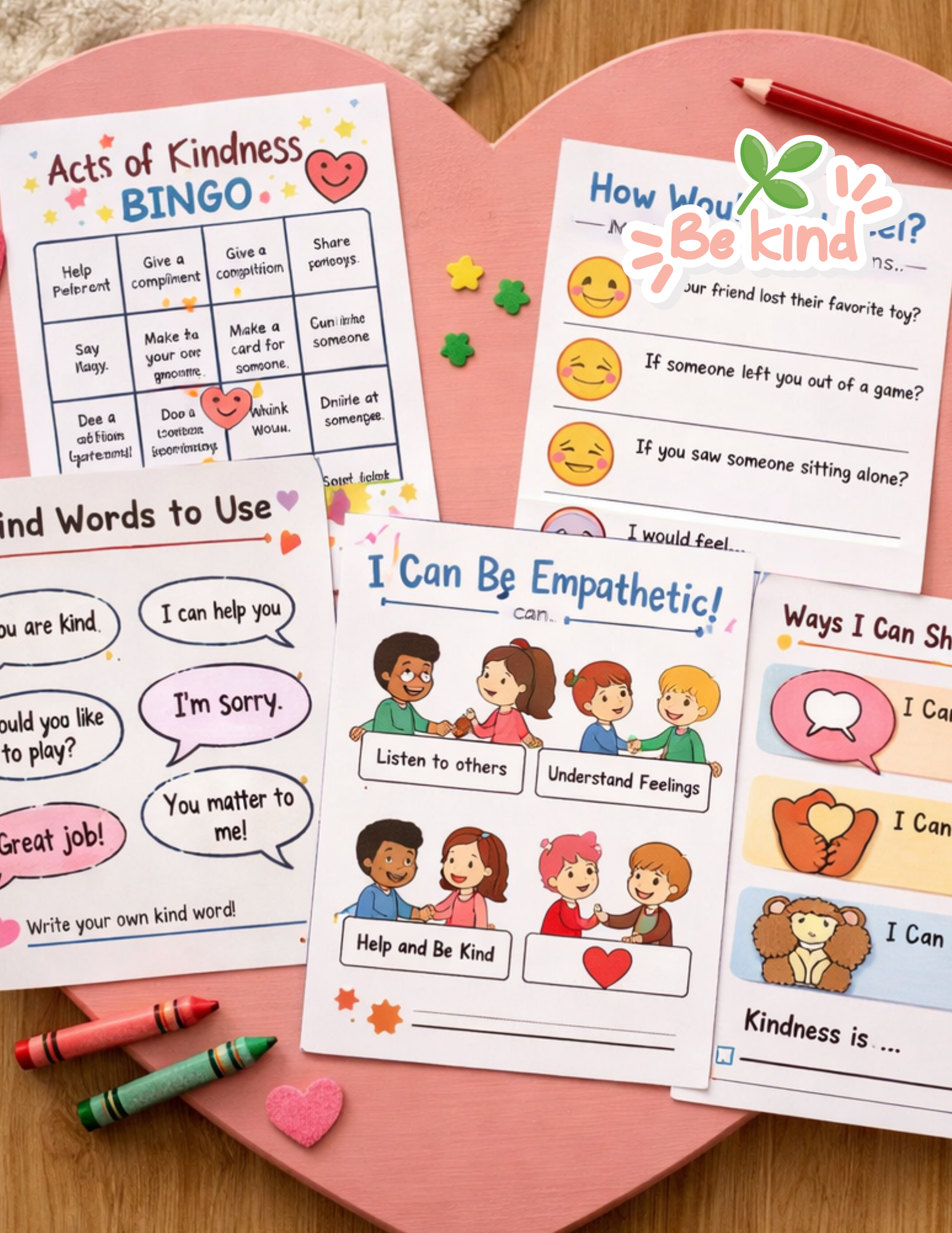
Create meaningful moments of connection with this free Kindness Activity Packet, designed to help children explore empathy, compassion, and kindness in a simple, fun, and pressure-free way.
Perfect for homeschool families, this gentle packet focuses on building emotional awareness and positive social skills through engaging activities without overwhelming lessons or rigid expectations.
What’s Included:
Simple kindness worksheets that encourage thoughtful reflection
Fun, age-appropriate activities focused on empathy and being kind
Writing and drawing prompts to support different learning styles
Low-pressure activities ideal for reluctant writers
Print-and-go pages that require little to no prep
Skills & Concepts Covered:
Understanding and expressing emotions
Practicing kindness in everyday situations
Building empathy and compassion
Encouraging positive communication
Supporting emotional regulation
Perfect For:
Homeschool families of all styles
Heart-centered or play-based learning
Social-emotional learning (SEL)
Morning baskets or gentle afternoon lessons
Valentine’s Day or February-themed learning
Calm days when everyone needs a reset
Download Details:
Free digital download
PDF format
Print as many pages as you need for your family
Bring more empathy, kindness, and heart-centered learning into your homeschool—one gentle activity at a time. 💖
Simple Ways to Teach Empathy at Home
1. Model Empathy Daily
Children learn empathy by watching us. When we respond with patience, acknowledge feelings, and show understanding, we teach powerful lessons without saying a word. Narrate your own emotions when appropriate and show how you work through them.
2. Normalize Talking About Feelings
Create space for open conversations about emotions. Use phrases like:
“That sounds really frustrating.”
“I can see why you’d feel that way.”
“How do you think they felt in that moment?”
Naming emotions helps children understand both themselves and others.
3. Use Stories as Empathy Tools
Books are one of the most effective ways to teach empathy. Pause during read-alouds to ask questions about characters’ feelings, motivations, and choices. Discuss how situations could be handled with kindness or understanding.
4. Encourage Perspective-Taking
When conflicts arise, gently guide children to consider another point of view. Ask reflective questions rather than jumping to solutions. This builds problem-solving skills and emotional awareness.
5. Practice Kindness Through Action
Acts of kindness don’t need to be big. Writing notes, helping siblings, caring for pets, or checking in on a friend all reinforce empathy through real-life experiences.
6. Embrace Mindful Moments
Mindfulness practices such as deep breathing, nature walks, or quiet reflection help children regulate emotions and stay connected to their inner world. A calm child is better able to connect with others.
Letting Go of Perfection
Heart-centered learning doesn’t mean peaceful days all the time. Big emotions, disagreements, and tough moments are part of the process. These challenges are not failures; they are opportunities for growth and connection.
Instead of asking, “How do I stop this behavior?” try asking, “What is my child trying to communicate?”
The Long-Term Impact of Heart-Centered Learning
When empathy is prioritized, children grow into emotionally aware, compassionate individuals who understand the value of kindness and connection. These lessons extend far beyond childhood and shape how they navigate friendships, challenges, and the world around them.
In homeschooling, we are not just teaching lessons—we are shaping humans. By leading with the heart, we create a learning environment rooted in trust, compassion, and lifelong growth.
Sometimes the most meaningful education happens in the quiet moments, the deep conversations, and the simple acts of understanding.
And that is more than enough.